
Installation Guide
Tools Required
Reciprocal saw (or hand saw) | Electric Driver Drill | Tek Screws | Hole Saw
Note: Turn LOKPOD™ stack side ways to make it easier to take LOKPODs off one another.

Step 1
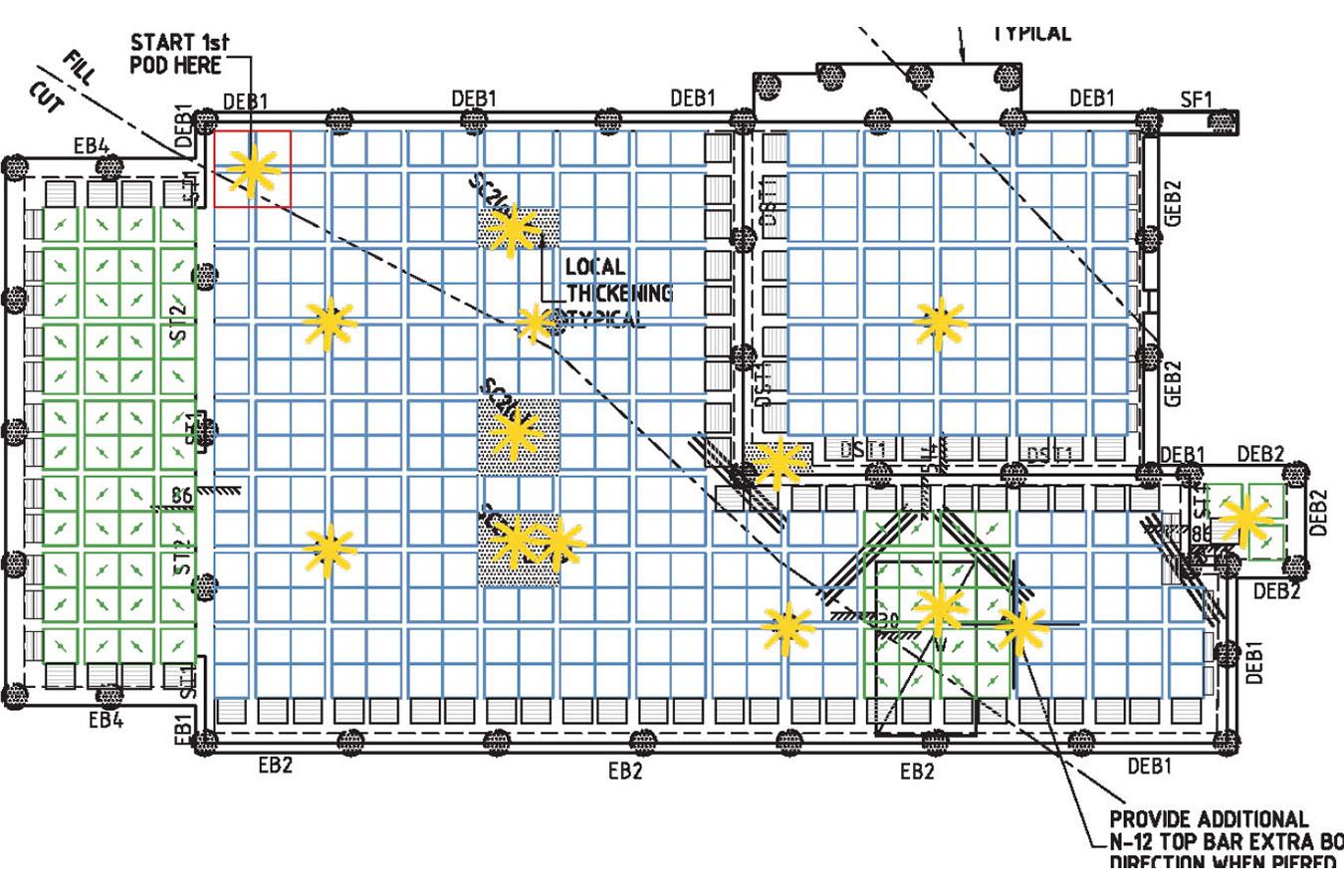
Review engineers drawing to understand site layout and starting point
Step 2
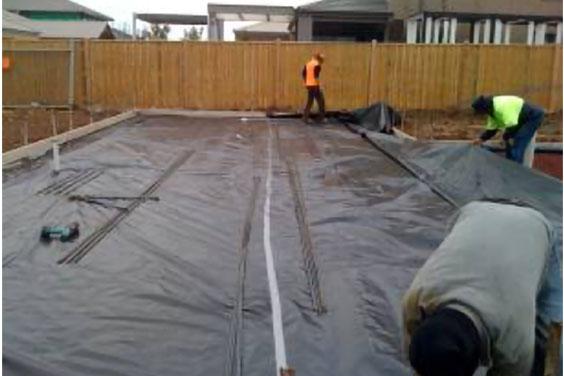
Prepare site, mark out perimeter, plastic film down and formwork installed
Step 3
After plastic film is on the ground, spray paint the:
- Starting position
- Pier locations
- Slab thickenings start and finishes
- Beam locations for easy recognition when laying LOKPODs™ and to ensure complete structural compliance across these sections when pouring concrete

Step 4
Set perimeter spaces and place reinforcing (trench mesh)
Note: If only a ¼ of a LOKPOD™ needs to be
used, use extenders instead of cutting single LOKPOD™.
Step 5
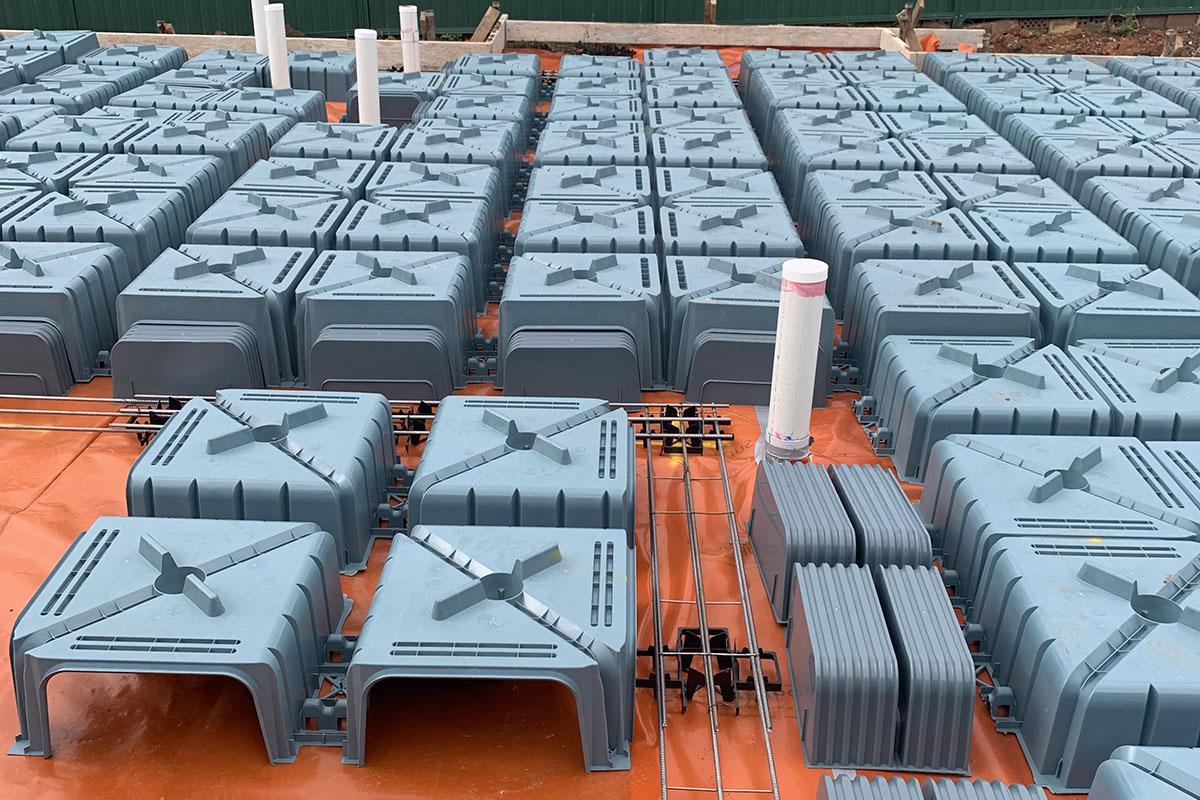
Put down the bulk of the LOKPODs™ and extenders – skip over any LOKPODs™ that need to be cut to accommodate for gaps/pipes and other irregularities
Step 6
Extenders should be installed under the pod edge to close the opening on the exterior pod sides (teking the extenders onto the LOKPODs™ at the correct dimension enhances the installation process)

Step 7
Working your way from the starting position from one side of the slab to the other, LOKPODs™ will lock and click into one another – ensure the line of LOKPODs™ is kept straight
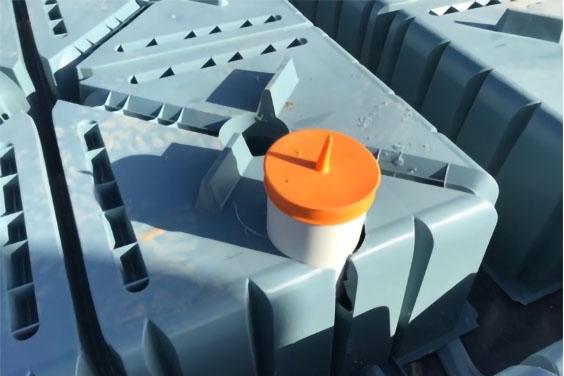
Step 8
Cut LOKPOD™ to the required size to accommodate for gaps/pipes and other irregularities (a team member can now start putting down the rebar)
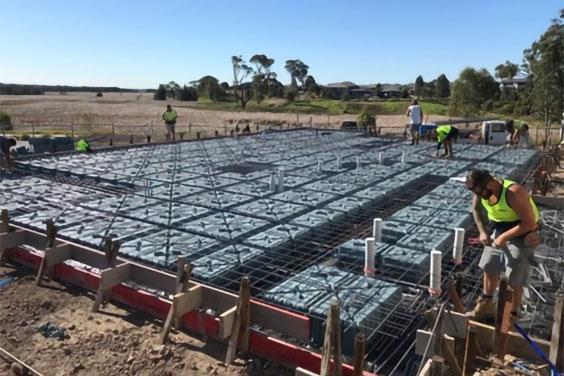
Step 9
Services and plumbing can either be accommodated by utilising the extender in between pods, using a hole saw to cut
through the pod, or a piping flange teked to the pod to plumb and secure the pipe.
Step 10
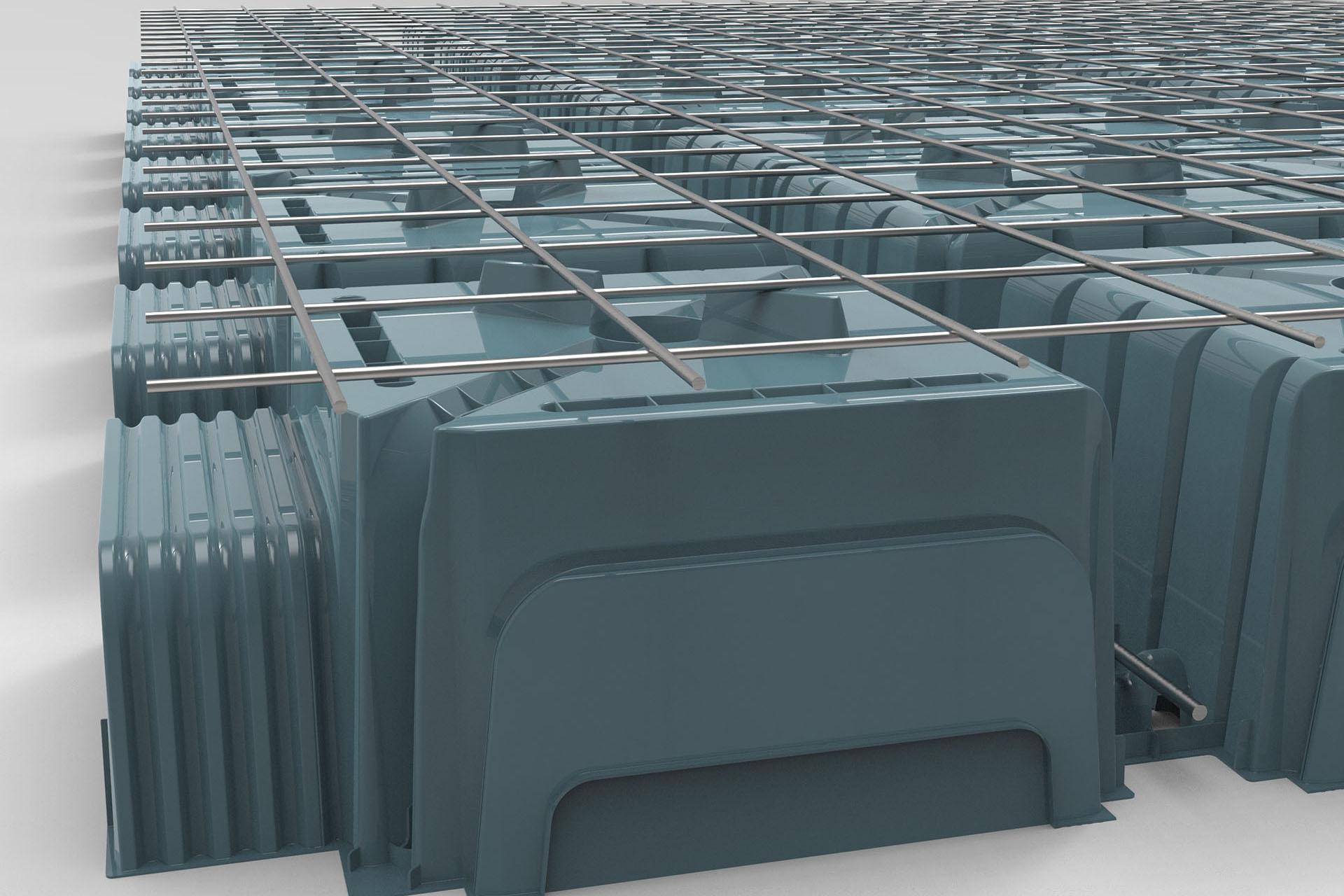
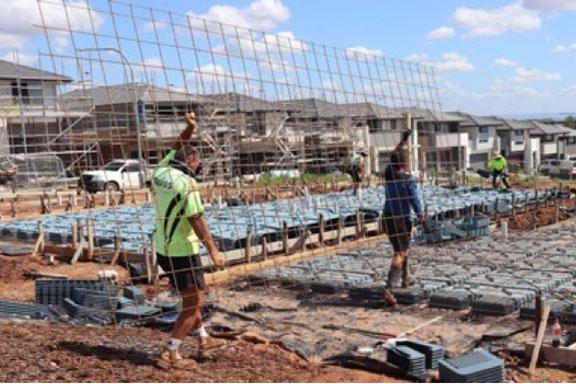
The internal beam bars are laid in the chairing recess - inbuilt between the turrets of the pod. The mesh is then laid on top of the pods – no extra chairs needed. Ensure mesh sits on top of inbuilt chairs and correct cover is retained throughout the slab. Tie in remainder of steel to engineer’s specifications.
Drop edge beams can be formed with extenders and also through incorporation of plastic formboards in a horizontal application and teked on to the uprights, these are consumed in the pour.